RACINES
The use of art in the city
A video about La Grande Motte, a seaside resort designed from scratch by Jean Balladur between 1962 and 1974 (commissioned by the French State).
With the testimony of the artist Michèle Goalard (1936-2016).
“I needed to give all this space a whole, a soul, a root.”
Michèle Goalard - 2015
21'12'' - 2015 - Global Vision production
Wavering
by Anne Jarrigeon
Anthropologist, video artist, senior lecturer at the École d'Urbanisme de Paris
“At the stern of the barge Louise-Catherine, in the dark hollow of the hold, Lucinda Groueff's video, projected straight onto the wall, radiates the incandescent light of La Grande Motte. The dazzling white of the buildings and sculptures by Jean Balladur and Michèle Goalard stretches out and seems, along the rough edge of the image, to repaint the boat's raw concrete. A transfer of light, a transfer of colour onto this favourite material of utopia, here as there.
A succession of long static shots, Lucinda Groueff's work first appears almost as a photograph. The curious visitor will lean in for a closer look. They may pick up the headphones provided to shut out the sound of the exhibition and find themselves on the shores of the Mediterranean. The crunch of footsteps on the sandy paths, the breath of the wind and children's laughter will recreate that atmosphere for them aboard the barge. Perhaps they will even want to stop altogether, take the time to wait for the next sequence, and then feel the boat gently rocking. Perhaps they will feel a vertigo that echoes the slight movements of the camera which, despite its apparent stillness, does not seem to have been placed on a tripod.
A wavering floor, suddenly fragile, as fragile as the “cosmic roots” of La Grande Motte, the subject of the film, have become. Lucinda Groueff frames in wide shots the places, or more precisely the “sculptural incidents”, designed by their creators, Michèle Goalard and Jean Balladur, to give the new town an “original ground”. In voice-over, Michèle Goalard recalls the principles behind these works with a “use value”, concrete answers to Jean Balladur's concern to give his architecture a “soul”. They led to very strong symbolic forms, at once works with evocative names – “Les Tramontanes”, “Le Labech”, “Les Vagues”, “La Terre”… – and parts of a terrain for exploration and play.
“Jeux interdits et dangereux” (forbidden and dangerous games) can now be read on signs fixed to the sculptures themselves. Then the video, through the formidable efficiency of its editing, makes us hear the deafening noise of cars precisely where they have been banned from the start. This clash with a view of Jean Balladur's pedestrian layout suddenly raises doubts about the future of these places.
What could be more fitting than a boat to unsettle our perception of anchorings weakened by changing uses?”
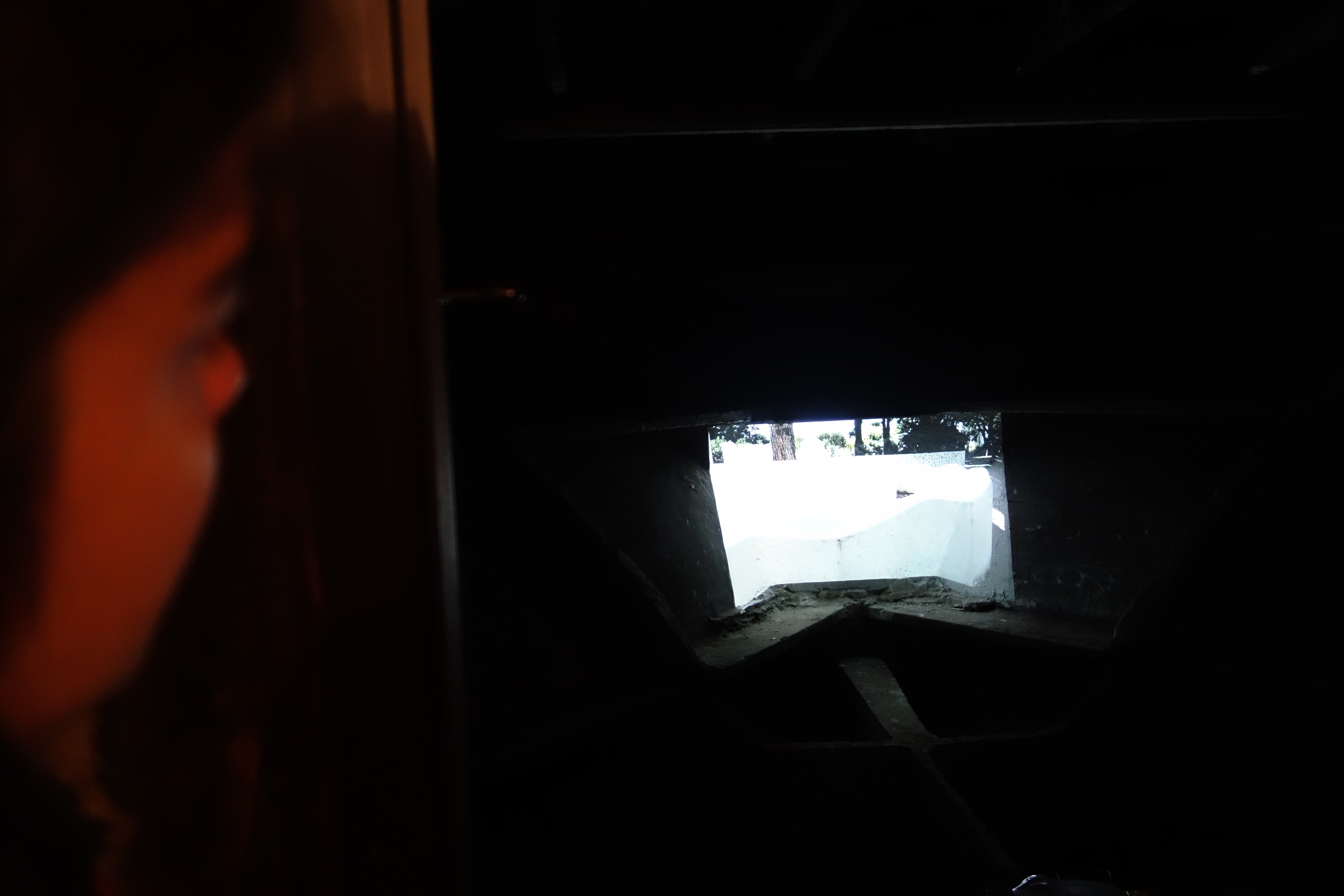
Video shown at the Urban Utopias exhibition.
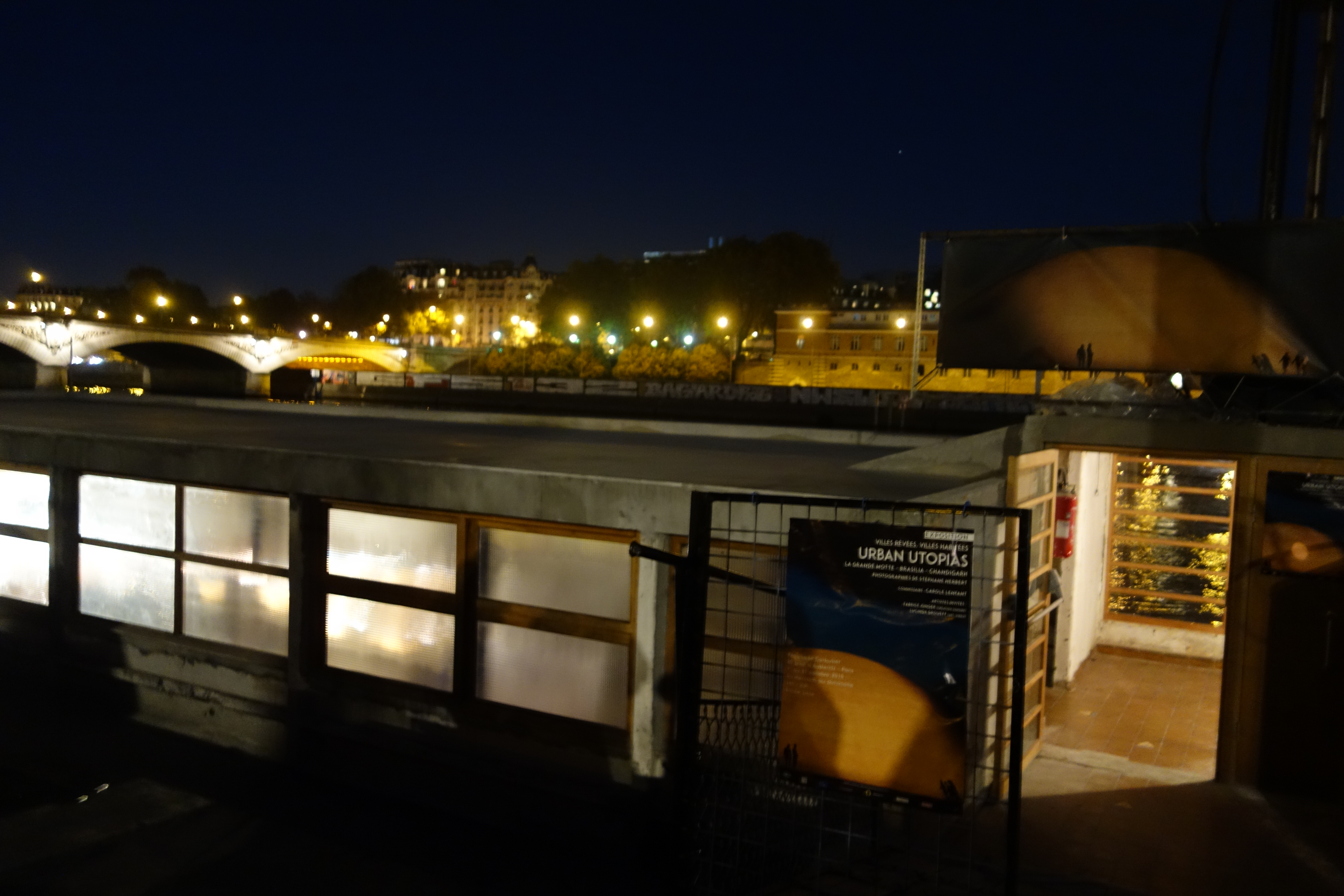
Continuous projection in the hold of the barge Louise-Catherine, in autumn 2015.
Built in 1915 in reinforced concrete to carry coal between Rouen and Paris, the barge was converted by Le Corbusier in 1929 into a floating shelter for homeless people, run by the Salvation Army from 1929 to 1994. It sank in February 2018 after a major flood of the Seine, as the water was going down.